
The Fascinating Evolution of the Corvette Through the Decades
The Chevrolet Corvette stands as one of the most iconic American sports cars, symbolizing speed, style, and innovation since its debut. Its history reflects not only advances in automotive technology but also changing tastes and cultural shifts over the decades. Exploring the Corvette’s journey reveals how this car evolved from a modest concept to a high-performance legend.
The Birth of an American Sports Car: 1950s
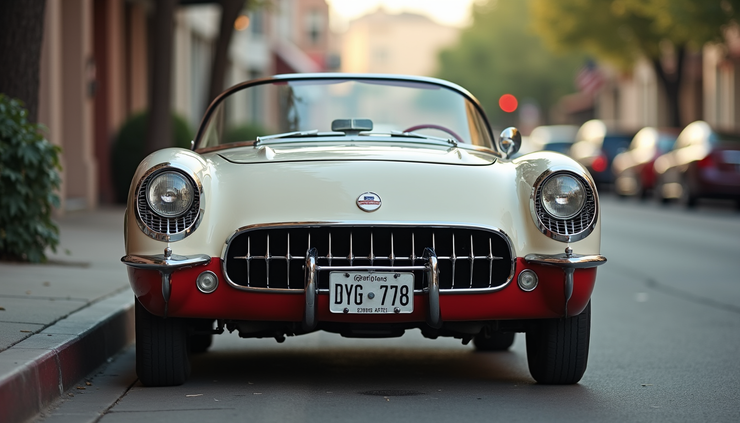
The Corvette first appeared in 1953 as Chevrolet’s answer to the growing demand for a stylish, affordable sports car. At the time, European sports cars dominated the market, and American manufacturers sought to create their own contender. The original Corvette featured a fiberglass body, a 150-horsepower inline-six engine, and a sleek design inspired by European models.
Despite its innovative look, the early Corvette faced challenges. Its performance lagged behind expectations, and sales were slow initially. However, Chevrolet’s commitment to improvement led to the introduction of a V8 engine in 1955, which significantly boosted power and appeal. By the end of the decade, the Corvette had established itself as a symbol of American automotive ambition.
The Muscle and Style of the 1960s
The 1960s marked a turning point for the Corvette, with the introduction of the second generation (C2) in 1963. This generation brought the famous “Sting Ray” design, characterized by sharp lines, hidden headlights, and a split rear window on the 1963 model. The Sting Ray combined aggressive styling with improved handling and powerful engine options.
Performance became a key focus during this era. Chevrolet offered a range of V8 engines, including the legendary 427-cubic-inch big-block that delivered over 400 horsepower. The Corvette became a favorite among racing enthusiasts and collectors alike, cementing its reputation as a true American muscle car.

Innovation and Challenges in the 1970s and 1980s
The 1970s brought both innovation and challenges for the Corvette. The third generation (C3), introduced in 1968, featured a longer, more aerodynamic body inspired by the Mako Shark II concept car. This generation lasted through 1982, making it one of the longest-running Corvette designs.
However, the decade also saw stricter emissions regulations and rising fuel prices, which affected performance. Engine power decreased compared to the 1960s, and the Corvette’s image shifted somewhat from pure muscle to a more refined grand tourer. Despite this, the C3 remained popular due to its distinctive style and improved comfort features.
The 1980s introduced the fourth generation (C4) in 1984, which focused on modern technology and improved handling. The C4 featured a digital dashboard, independent rear suspension, and a more aerodynamic shape. While early models had modest power, later versions like the ZR-1 pushed performance boundaries with a 375-horsepower V8 engine.
Modern Era and High Performance: 1990s to Today
The Corvette continued to evolve rapidly from the 1990s onward. The fifth generation (C5), launched in 1997, marked a major leap in engineering with a new chassis and a powerful LS1 V8 engine producing 345 horsepower. The C5 combined speed, comfort, and reliability, making it a favorite among sports car enthusiasts.
The sixth generation (C6), introduced in 2005, refined the Corvette’s design and performance further. It featured exposed headlights for the first time since the C2 and offered high-performance variants like the Z06 and ZR1. These models boasted supercharged engines and advanced suspension systems, rivaling European sports cars in speed and handling.
The seventh generation (C7), released in 2014, embraced aggressive styling and cutting-edge technology. It included features like magnetic ride control, launch control, and a powerful 6.2-liter V8 engine. The C7 Z06 and Grand Sport models delivered track-ready performance while maintaining everyday usability.
The latest generation, the C8, introduced in 2020, represents the most radical change in Corvette history. It moved the engine to a mid-engine layout, improving balance and handling dramatically. This shift places the Corvette in direct competition with exotic sports cars costing much more. The C8 offers impressive acceleration, advanced aerodynamics, and a modern interior, showing how the Corvette continues to push boundaries.

The Corvette’s Legacy and What Lies Ahead
The Corvette’s history is a story of constant evolution, balancing tradition with innovation. It started as a bold experiment and grew into a symbol of American performance and style. Each generation reflects the era’s challenges and opportunities, from early fiberglass bodies to high-tech mid-engine designs.


Comments